Destructive borer beetle: residents invited to important community meeting in Kraaifontein and Pinelands
20 March 2025
The City of Cape Town is urging residents to attend vitally important community training sessions in Kraaifontein and Pinelands about the invasive Polyphagous Shot Hole Borer beetle (PSHB). The sessions will be hosted by the City's Invasive Species Unit in Kraaifontein on Thursday, 25 March 2025, from 17:00 until 19:00; and in Pinelands on 27 March 2025, from 17:00 until 19:00. Following the latest sighting of the PSHB in Durbanville and Bellville, we recommend that residents who have trees on their properties set time aside to learn more about the beetle, including the threat PSHB poses to Cape Town’s urban forest.
The upcoming PSHB training session details are as follows:
Kraaifontein
• Date: Tuesday, 25 March 2025
• Time: 17:00 to 19:00
• Venue: Kraaifontein Library hall
Pinelands
• Date: Thursday, 27 March 2025
• Time: 17:00 to 19:00
• Venue: Pinelands Library hall
Some of the trees affected in Cape Town include Boxelders, London Planes, English Oaks, Beef Wood, Weeping Willow, Cape Chestnut, Sweet Viburnum, Black Locust, Paperbark, Liquid Amber, Chinese Cottonwood and Maples.
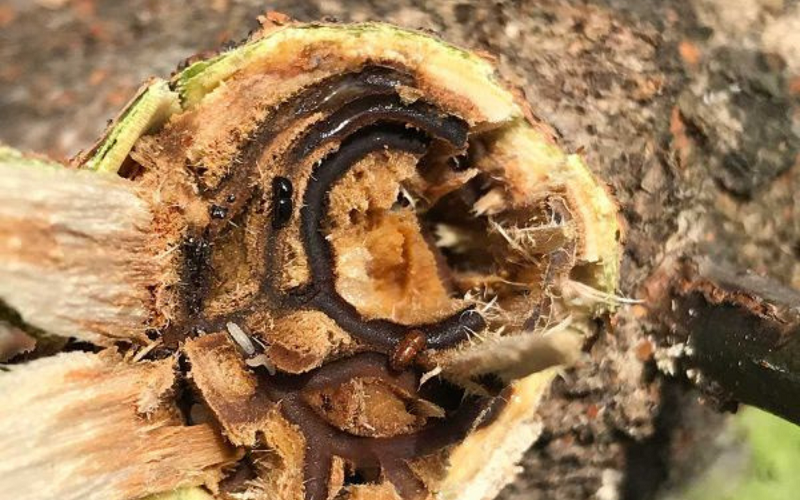
What will be learnt at the training session:
• How to identify infested trees and what symptoms to look out for
• What to do next, what not to do
• How to handle infested biomass
• How to safely dispose of infested biomass
• How to transport green waste
• How to handle equipment and machinery in a manner that will not spread the pest to other areas
‘We urge all private landowners to inspect the trees on their properties for any symptoms of infestation and to contact us immediately if any signs are detected. We are extremely concerned about the latest sighting and need the assistance and cooperation of residents and businesses working with plant material. Residents are urged to work with the City in fighting the spread and the impact of PSHB on the City’s urban forest. We are confident that working together, we should be able to manage the spread of PSHB and will continue with public engagements to raise awareness and provide updates on the management effort,’ said the City’s Deputy Mayor and Mayoral Committee Member for Spatial Planning and Environment, Alderman Eddie Andrews.
The City requests residents to share the details of the upcoming public meetings with their neighbours.
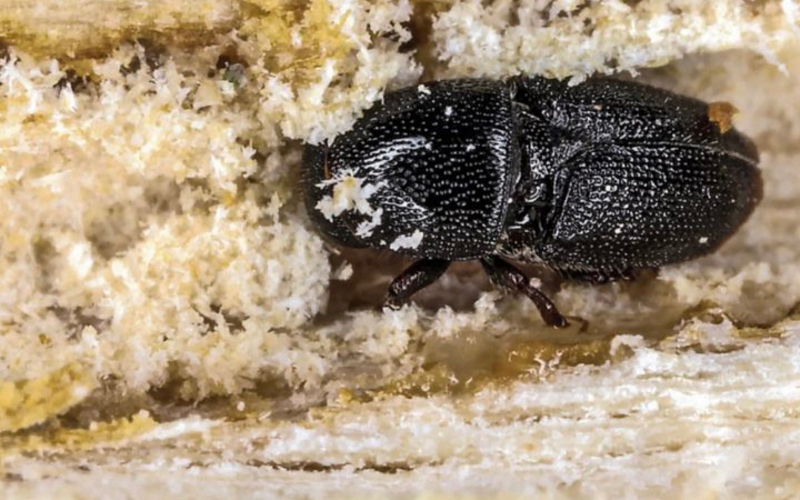
‘Our goal is to reach as many residents as possible to try and limit the spread into neighbouring suburbs. Please attend or drop in after work at the Kraaifontein or Pinelands training session. We would greatly appreciate your participation,’ said Alderman Andrews.
The City continues to collaborate with research institutions and any new and relevant information is incorporated into our management approach and strategy.
To date, no single solution has been identified and the best management approach is still to reduce beetle numbers by physically removing highly infested reproductive host trees.
Researchers from FABI, the Forestry and Agricultural and University of Pretoria are working to identify and test viable biocontrol agents. Residents are welcome to contribute any evidence-based information on potential solutions with accompanying data.
Latest infestation statistics:
Over 600 sightings of infested trees have been recorded in Newlands, Rondebosch, Mowbray, Claremont, Kenilworth, and Observatory along the Liesbeek River
Over 6 000 infested trees have been sighted in the Helderberg area since 2019 to date
To date, 26 trees have been infested in Penhill, Eerste River, among which Boxelders, London Planes, English Oaks, Beef Wood, Weeping Willow, Cape Chestnut, Black Locust, Paperbark and Maples
How to report PSHB sightings:
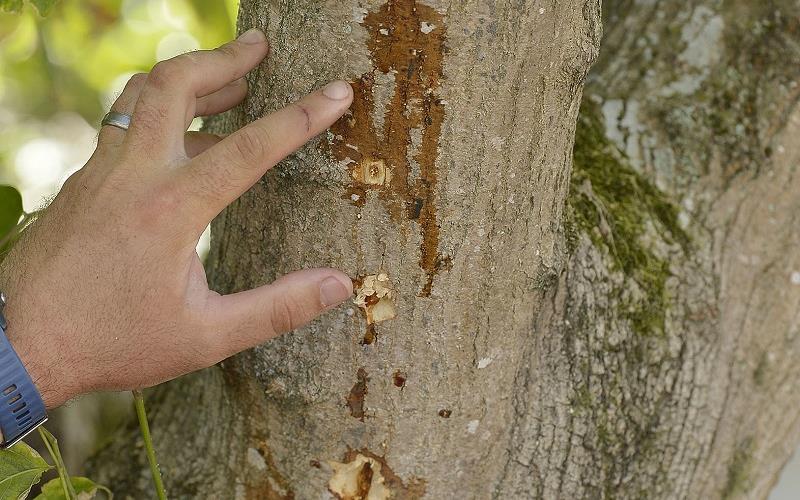
‘Residents are advised that we are currently dealing with a large volume of requests for PSHB inspections and as a result, our turnaround time is longer than normal. To assist us, we request residents who are submitting suspected PSHB reports to take clear photographs showing the leaves, flowers or fruits of the tree or trees in question, as well as photographs of the symptoms observed on the stem or bark of the tree. We then ask that you please remove a piece of the bark around the entry-hole or where any symptoms on the bark were observed, take a photo and attach this to your report,’ said Alderman Andrews.
The City understands that there is cost to removing infested trees. Unfortunately, the City cannot remove infested trees on private properties and each resident is required to take responsibility for their trees.
End
Published by:
City of Cape Town, Media Office